Dr. Ahmed Ballo
BDS, EDA, DABOI, MSc, Cert. Prostho, PhD
Board-Certified Specialist in Prosthodontics in Canada and Diplomate of the American Board of Oral Implantology, with extensive experience in prosthodontics and implant dentistry.
View Profile

Implant-supported dentures use a small number of implants to hold a denture in place, so it takes its support from the jaw rather than resting entirely on the gums. For many patients the practical difference is a denture that no longer moves when eating or speaking. Designs range from a removable overdenture that clips onto implants to fixed alternatives, and which suits you is decided from your anatomy and what you want from the result.
A conventional denture takes its support from the gums and the shape of the jaw underneath. That works reasonably well for an upper denture, which has the palate to help hold it, and much less well for a lower one, which sits on a narrow ridge and is moved by the tongue and cheeks. Long-term denture wearers also tend to lose bone volume in that ridge over the years, so a denture that fitted well at first gradually stops doing so. Implants address the support problem directly by anchoring the denture to the bone.
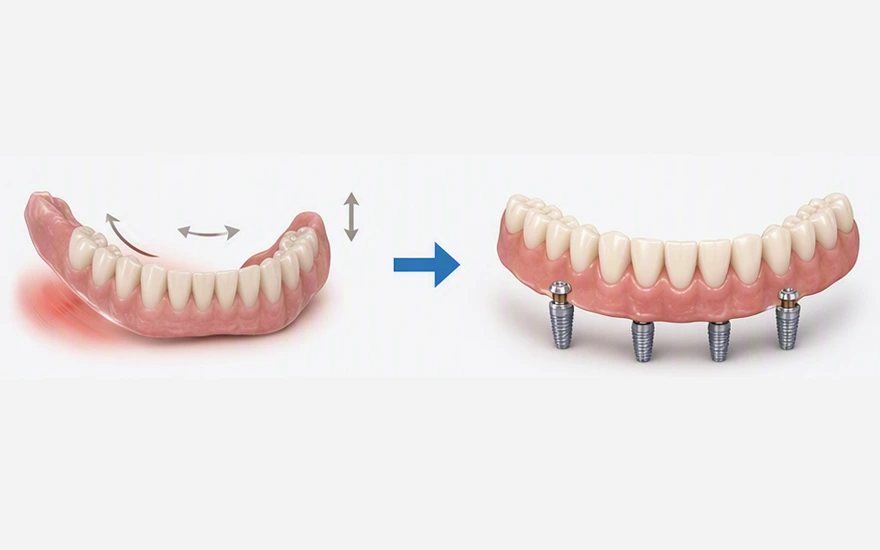
A removable overdenture clips onto the implants and is taken out for cleaning, which keeps hygiene simple and usually needs fewer implants. A fixed restoration stays in the mouth and is cleaned in place, which more closely resembles natural teeth but costs more and asks more of your cleaning routine. Neither is automatically better. Bone volume, how much tissue support the prosthesis needs to provide, your dexterity and your budget all feed into the recommendation.
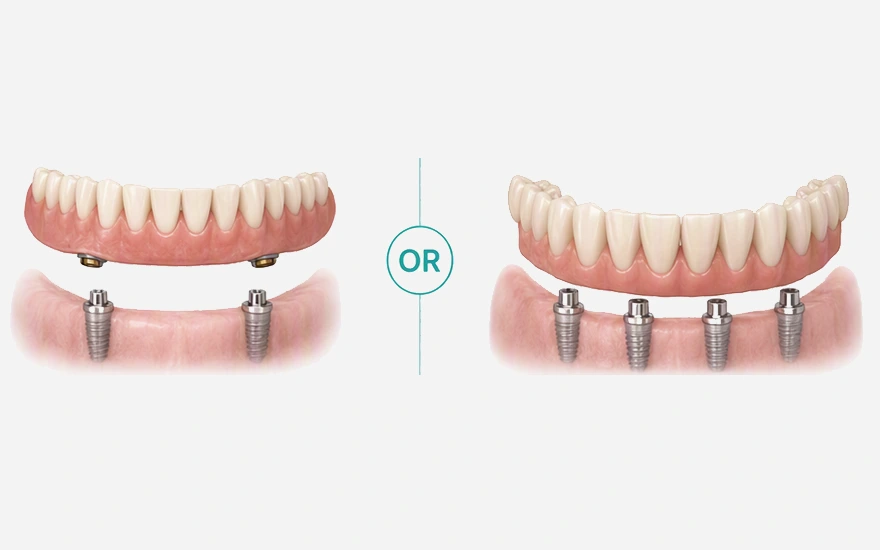
The number of implants is case dependent, determined by the arch being treated, the bone available, the denture design proposed and how much support is required. A lower overdenture is often planned on two implants; upper cases and fixed designs generally need more, because the bone is softer and the forces are distributed differently. The number comes out of the plan rather than being decided in advance.
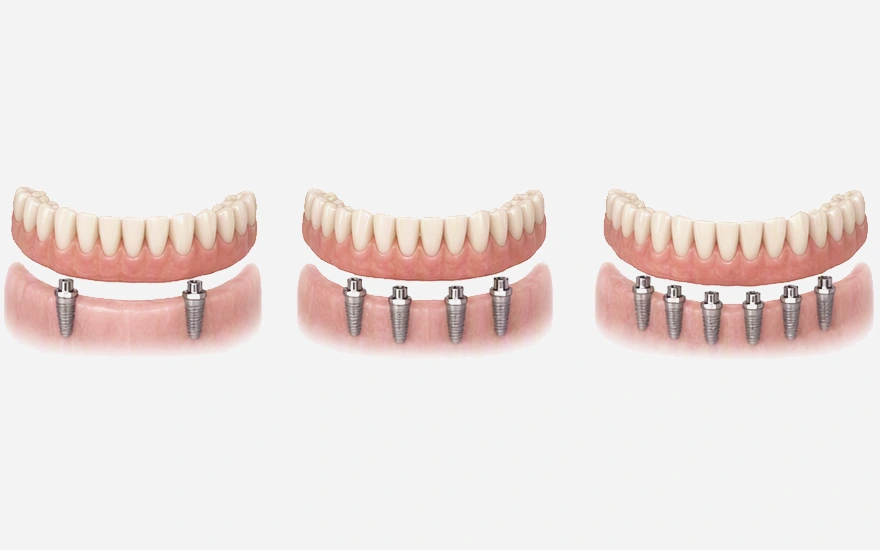
Sometimes an existing denture can be adapted to work with implant attachments, which reduces cost and means less time without a prosthesis. Whether that is sensible depends on how the denture was made, what condition it is in, and how well it currently fits. A denture that is already worn or poorly fitting is rarely worth converting, because the attachments would be added to a base that needs replacing anyway. The assessment gives you a straight answer either way.

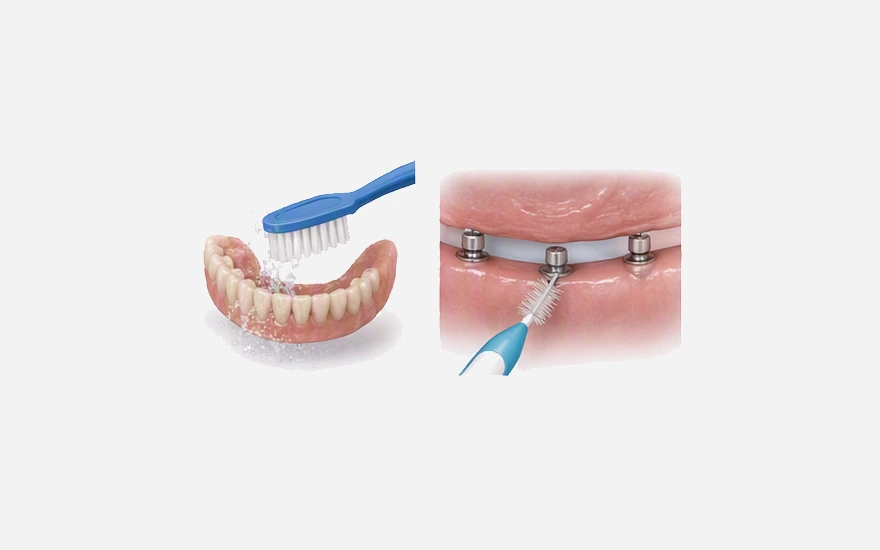
Implant-supported dentures still need daily cleaning, of both the prosthesis and the implants themselves, and regular professional review. The attachment components that provide the grip are wearing parts: they hold firmly, then gradually loosen, and are replaced periodically as routine maintenance. That is expected rather than a failure, and knowing it in advance avoids the impression that something has gone wrong a few years in.
Implant-supported denture treatment is as much a prosthodontic problem as a surgical one, which is why planning starts with the prosthesis and works backwards to where the implants need to go. Your assessment covers each of these before a design is recommended.
A consultation establishes whether implant support is possible in your case, how many implants it would take, and what it would cost before you commit to anything.
All prices in CAD · starting prices
Overall treatment
Supporting procedures
If you want something fixed
All prices are starting prices and may vary depending on case complexity, treatment requirements, materials and other clinical factors. Final treatment costs are confirmed following consultation and treatment planning. Prices effective September 2026.
The implant component has a published per-unit price. The denture side does not, because the number of implants, the attachment system and whether a new prosthesis is needed differ from patient to patient.
A lower overdenture may be planned on two implants; other cases need four or more. Each implant is priced from $999, so the count is the largest single variable.
Sometimes an existing denture in good condition can be adapted to attachments. Sometimes a new prosthesis gives a better result and a longer service life. The assessment says which, and they cost differently.
Different attachment designs carry different component and laboratory costs, and different maintenance patterns over the years.
Long-term denture wearers often have reduced bone volume. Where grafting is needed before implants can be placed it is a separate stage, from $1,000.
BDS, EDA, DABOI, MSc, Cert. Prostho, PhD
Board-Certified Specialist in Prosthodontics in Canada and Diplomate of the American Board of Oral Implantology, with extensive experience in prosthodontics and implant dentistry.
View Profile
Oral Surgery and Implants
Dr. Ali Mehdi brings over 15 years of experience in oral and implant surgery, with a focus on advanced implant dentistry and complex full-mouth rehabilitation. From routine oral surgery to advanced bone grafting and full-arch implant treatment, his approach combines surgical experience, digital technology, and individualized care.
View ProfileIt is a denture that uses dental implants for added retention or support, rather than relying entirely on the gums and the shape of the jaw to stay in place.
Different designs are possible. Some restorations clip onto the implants and are removed by the patient for cleaning; other implant-supported options are fixed and stay in place. The recommendation depends on your anatomy, your hygiene needs and what you want from the result.
There is no universal number. A lower overdenture is often planned on two implants, while other designs need more. The plan is based on the arch being treated, bone support and the prosthesis intended.
Sometimes. It depends on the denture's design, its condition, how well it fits now and the implant system planned. Where a conversion is not appropriate, a new prosthesis usually gives a better long-term result.
No. All-on-X generally refers to a fixed full-arch implant restoration that stays in the mouth. Implant-supported dentures include removable designs that clip onto implants. They solve a similar problem in different ways and at different costs.
Implant support is intended to reduce unwanted movement, and most patients notice a clear difference from a conventional denture. How much retention a design gives depends on the number of implants and the attachment system used.
The attachment components that provide the grip do wear over time and are replaced periodically as part of routine maintenance. This is normal rather than a fault, and it is worth factoring into the long-term cost.
Pricing is case dependent and confirmed once the number of implants, prosthetic design and any additional procedures are determined. Implant placement starts at $999 per implant.
Sedation options may be considered depending on the procedure and your needs. IV sedation with a specialist anesthesiologist starts at $800.
Patients travel to us from White Rock, South Surrey, Surrey, Langley, Delta and across the Fraser Valley. Our team also speaks Hindi, Punjabi and Urdu, and we accept referrals from dentists throughout the Lower Mainland.
Book a consultation with Apple Dental Specialists in White Rock. The team will review your goals and clinical findings, explain the treatment options that may be appropriate, and confirm the plan and final costs before care begins.