
Open 5 days a Week

Contact Us At (604) 385-0606

Menu

  • $
    Home
  • !
    About Us
  • !
    Our Team
  • !
    Patient Financing
  • !
    Services
  • !
    Dental Implants
  • !
    Oral Surgery
  • !
    Periodontal Care
  • !
    Sedation Dentistry
  • !
    Smile Impact
  • !
    Smile Stories
  • !
    Community
  • !
    Referrals
  • !
    Contact Us

Need help?

Oral surgery · White Rock, BC

Tooth Extraction in White Rock, BC

A tooth extraction may be recommended when a tooth cannot be predictably restored, or when removing it is a necessary part of a larger treatment plan. The type of extraction depends on the position of the tooth, how much sound structure remains, the root anatomy and the condition of the surrounding bone. At Apple Dental Specialists, removal is assessed and planned by Dr. Ali Mehdi alongside the question that matters just as much: what happens to the space afterwards.

Surgical care led by Dr. Ali Mehdi, with advanced surgical expertise
CBCT imaging where the anatomy needs to be seen, not estimated
Sedation options discussed and quoted before the day, not on the day

When a tooth cannot be saved

Extraction is the last option considered, not the first. A tooth is normally removed when decay or a fracture extends below the gum and bone level so that no restoration can seal against it, when a vertical root fracture splits the root, when root canal treatment has been attempted and the infection persists without a realistic retreatment or surgical option, when advanced gum disease has destroyed too much of the supporting bone for the tooth to be stable, or when severe resorption has undermined the root. A tooth may also be removed for planning reasons — to make room orthodontically, or because it sits where a more predictable restoration needs to go. Where a tooth is borderline, you are entitled to hear the case for keeping it as well as the case for removing it.

Simple and surgical removal — the difference

A simple extraction applies to a tooth that is visible above the gum with enough structure to grip and root anatomy that allows it to be eased out along a predictable path. The tooth is loosened within its socket and delivered; the appointment is short. A surgical extraction is needed when the crown has broken away at or below gum level, when roots are curved, splayed or fused to the bone, or when the tooth has not fully erupted. That involves reflecting the gum, sometimes removing a small amount of bone, and sectioning the tooth so each root is released separately. It is not a more worrying procedure — it is simply the technique that removes the tooth with the least damage to what surrounds it, which is exactly what you want if the site is going to carry an implant later.

What happens to the bone after a tooth is removed

The bone that held a tooth exists because the tooth was there. Once it is removed, that bone begins to remodel and shrink, and most of the change happens in the first several months — typically more on the outer, cheek-facing side, where the bone is thinnest. This is why a site left for years can need grafting before an implant that would not have needed it at the time of removal. Where an implant or bridge is a realistic future option, the socket can be grafted at the time of extraction to preserve ridge volume and shape. That decision is worth making before the tooth comes out, not afterwards, because it costs less and achieves more when it is done in the same appointment.

Replacing the tooth, and when to decide

Not every extracted tooth needs replacing — a wisdom tooth generally does not, and neither does a tooth removed for orthodontic space. Where a functional tooth is lost, the options are an implant-supported crown, a conventional bridge supported by the neighbouring teeth, or a removable partial denture, and each carries different consequences for the teeth either side of the gap. Leaving a gap is also a choice with consequences: opposing teeth can over-erupt into the space and neighbouring teeth can drift, which narrows the options later. The most useful time to discuss replacement is at the consultation before the extraction, so that the removal itself can be planned around the result you eventually want.

Aftercare in the first forty-eight hours

Bite firmly on the gauze provided for the time you are told, and replace it rather than checking the site repeatedly, as disturbing a forming clot is the most common cause of continued bleeding. For the first 24 hours avoid rinsing, spitting, smoking, alcohol, hot drinks, straws and strenuous activity. From the next day, gentle salt-water rinses after meals keep the area clean, and you can brush the other teeth normally while staying clear of the socket itself. Eat soft, cool food and keep hydrated. Some oozing on the first evening and swelling over the following two days are expected. Contact us if bleeding does not settle with twenty minutes of firm pressure, if pain sharpens from the third day, or if swelling worsens rather than improves.

Reasons a tooth is removed

Decay or fracture extending below the bone, vertical root fracture, persistent infection after root canal treatment, advanced periodontal bone loss, severe root resorption, retained baby teeth, teeth removed for orthodontic space, and teeth removed as part of planning a full-arch or implant restoration.

  • Simple extraction
  • Surgical extraction
  • Broken and root-fractured teeth
  • Failed root canal
  • Periodontally hopeless teeth
  • Socket preservation
  • Same-visit grafting
  • Sedation options

Want a second opinion before the tooth comes out?

If you have been told a tooth needs removing and you are not sure, a consultation gives you the findings, the case for keeping it where that case exists, and a plan for the space afterwards.

Tooth Extraction Pricing

All prices in CAD · starting prices

Often planned alongside

Socket preservation grafting Quoted with the extraction
Book a Consultation See full oral surgery pricing View Patient Financing 4.8259 Google reviews (opens in a new tab)

All prices are starting prices and may vary depending on case complexity, treatment requirements, materials and other clinical factors. Final treatment costs are confirmed following consultation and treatment planning. Prices effective September 2026.

What changes the figure

Extractions are priced from the current BC general dentist fee guide, and the code depends on the technique the tooth actually requires rather than on which tooth it is. Your own figure is confirmed in writing after examination and imaging.

Simple or surgical

A tooth eased out along a predictable path and a tooth that must be surgically exposed and sectioned are different procedures with different codes and different appointment lengths.

Whether the socket is grafted

Socket preservation at the time of removal is quoted alongside the extraction. It adds to the appointment, and it is usually less involved and less expensive than rebuilding a collapsed ridge later.

Sedation

Sedation is assessed, consented and quoted separately from the surgery itself, and it is confirmed with you in advance rather than raised at the appointment.

What replaces the tooth

The extraction and the replacement are separate stages with separate costs. Planning both at the consultation means you see the whole figure before you start, rather than one stage at a time.

Insurance and payment options

Surgical procedures are more commonly covered by dental plans than elective treatment, though the proportion varies. We can provide a written treatment plan with procedure codes so you can confirm your own coverage before deciding, and patient financing is available.

Your surgical team

Dr. Ali Mehdi

Dr. Ali Mehdi

Oral Surgery and Implants

Dr. Ali Mehdi brings over 15 years of experience in oral and implant surgery, with a focus on advanced implant dentistry and complex full-mouth rehabilitation. From routine oral surgery to advanced bone grafting and full-arch implant treatment, his approach combines surgical experience, digital technology, and individualized care.

View Profile


Dr. Hamidreza Shirbani

Dr. Hamidreza Shirbani

General Dentist │ MSc in Periodontics

General dentist with a Master of Science in Periodontics, prior Assistant Professor experience and clinical interests in periodontal treatment, implants and family dentistry.

View Profile
Dr. Viprat Joshi

Dr. Viprat Joshi

Dentist

Dentist with a Master's degree completed in Australia, focused on ethical, personalized care and helping patients make informed decisions about treatment.

View Profile

Frequently asked questions

Extractions are priced from the current BC general dentist fee guide, and the applicable code depends on whether the removal is simple or surgical. Socket preservation grafting, where it is planned, is quoted alongside it. Your figure is confirmed in writing after examination.

The extraction itself is carried out under local anaesthetic and is not painful, although you will feel firm pressure and movement. Discomfort afterwards is expected for a few days and is managed with the pain relief advised for you.

Sometimes. Root canal treatment, a crown, or periodontal treatment may retain a tooth that looks unpromising, and where a tooth is borderline we will set out the case for keeping it alongside the case for removing it. Extraction is recommended when no restoration can be expected to hold.

If an implant or bridge is a realistic option for that space, usually yes. Bone begins to remodel and shrink once the tooth is gone, mostly within the first several months. Grafting at the time of removal preserves ridge volume and is generally less involved than rebuilding the site later.

The gum over the socket typically closes within two to three weeks, while the bone underneath continues to fill and remodel for several months. Implant timing is planned around that, and is confirmed at your review rather than fixed in advance.

Soft, cool food for the first day or two, then progress as comfort allows. Avoid hot drinks, alcohol, straws and anything crunchy that could lodge in the socket, and chew on the other side while the site settles.

Not always. A wisdom tooth or a tooth removed for orthodontic space usually needs no replacement. Where a functional tooth is lost, leaving the gap allows opposing teeth to over-erupt and neighbouring teeth to drift, which can narrow your options later, so it is worth discussing before the extraction rather than after.

Yes where it is appropriate. Many extractions are comfortably completed under local anaesthetic alone. IV sedation with a specialist anesthesiologist can be arranged for surgical removals or for significant anxiety, and it is assessed and quoted separately in advance.

Extractions are more commonly covered than elective treatment, though the proportion varies between plans. We can provide a written treatment plan with procedure codes so you can confirm your own coverage before deciding, and patient financing is available.

Visit us in White Rock

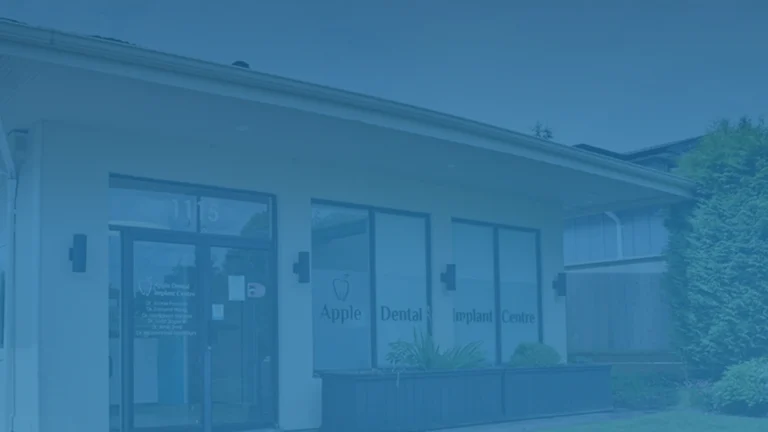
Apple Dental Specialists
1115 Stayte Rd
White Rock, BC V4B 4Y9

Patients travel to us from White Rock, South Surrey, Surrey, Langley, Delta and across the Fraser Valley, and we accept surgical referrals from dentists throughout the Lower Mainland. Our team also speaks Hindi, Punjabi and Urdu.

Opening days and hours

  • Monday – Friday9:00 am – 5:00 pm
  • SaturdayClosed
  • SundayClosed
4.8259 Google reviews (opens in a new tab)

Plan the removal and the replacement together

Book a consultation at Apple Dental Specialists in White Rock. We will assess whether the tooth can be kept, explain how it would be removed if it cannot, and set out what the space needs afterwards — with costs confirmed in writing first.

4.8259 Google reviews (opens in a new tab)