
Open 5 days a Week

Contact Us At (604) 385-0606

Menu

  • $
    Home
  • !
    About Us
  • !
    Our Team
  • !
    Patient Financing
  • !
    Services
  • !
    Dental Implants
  • !
    Oral Surgery
  • !
    Periodontal Care
  • !
    Sedation Dentistry
  • !
    Smile Impact
  • !
    Smile Stories
  • !
    Community
  • !
    Referrals
  • !
    Contact Us

Need help?

Periodontal care · White Rock, BC

Periodontal Care in White Rock, BC

Periodontal care is treatment of the gums and the bone that holds your teeth and implants in place. It ranges from cleaning below the gumline to surgical procedures that manage tissue position, provide access, or address defects in the bone. Most cases begin — and many finish — without surgery. At Apple Dental Specialists, gum treatment is planned alongside whatever restorative or implant work you need, rather than in isolation from it.

Full periodontal charting, so treatment is based on measurements rather than a look
Non-surgical treatment first; surgery only where it is genuinely needed
Gum treatment coordinated with your implant and restorative care in one practice

What gum disease actually is

Gum disease runs on a spectrum. Gingivitis is inflammation of the gum alone: gums that are red, puffy and bleed when brushed, with no damage yet to the underlying support. It is reversible. Periodontitis is what happens when the inflammation extends below the gum and begins destroying the bone and attachment holding the tooth. That loss does not grow back on its own, which is why the distinction matters so much. The critical point is that periodontitis is usually painless until it is advanced. People notice bleeding and assume it is normal, or notice nothing at all, and the first obvious sign can be a tooth that has started to move.

What a proper assessment involves

A periodontal assessment is measurement, not inspection. A fine probe is walked around each tooth at six points, recording how deep the space between gum and tooth has become, whether it bleeds, whether the gum has receded, and whether the tooth has any mobility or involvement between the roots. Radiographs show the bone level. That produces a chart rather than an impression, and it is what makes it possible to tell a site that is stable from one that is deteriorating when you look again six months later. If you have been told you have gum disease without anyone measuring, it is reasonable to ask for the numbers.

Non-surgical treatment comes first

The foundation of periodontal treatment is thorough cleaning below the gumline — scaling and root planing — combined with whatever changes to daily cleaning will actually work for your mouth, and control of the things that drive the disease. Most cases respond well to this. The tissue tightens, bleeding settles and pocket depths reduce. Treatment is then reassessed rather than assumed to have worked: the same measurements are repeated, usually a couple of months later, and the sites that have not responded are identified specifically. Surgery is considered only for those sites, and only once the non-surgical phase has been given a fair chance.

When surgery is appropriate

Surgical periodontal treatment addresses problems that cleaning alone cannot reach or correct. Pocket reduction provides access to deep sites that remain inflamed and impossible to maintain. Gum grafting adds or repositions tissue where recession has exposed root surface or left too little firm gum to withstand brushing. Crown lengthening adjusts the level of gum and bone so a restoration has sound tooth structure to hold on to. Bone grafting and regenerative procedures may be used where a defect in the bone has a shape that lends itself to it. Each is a specific answer to a specific finding, not a general escalation.

What holds the result afterwards

Periodontitis is managed rather than cured, in the same way as many other chronic conditions. Once it has been treated successfully, the result is held by maintenance appointments at shorter intervals than a routine cleaning — often every three or four months — because the bacteria re-establish in deeper sites faster than they do in healthy ones. Smoking is the single largest modifiable risk factor and materially reduces how well treatment works. Poorly controlled diabetes works in both directions, each condition making the other harder to manage. None of this is stated to lecture you; it is stated because it determines whether the treatment you pay for holds.

Signs worth having measured

Gums that bleed when you brush or floss, persistent bad breath or a bad taste, gums that look as though they have shrunk back, teeth that look longer than they used to, sensitivity at the root, a tooth that feels loose or has shifted, or a gap that has opened between two teeth that always touched.

  • Periodontal charting
  • Scaling & root planing
  • Pocket reduction
  • Gum grafting
  • Crown lengthening
  • Bone defects
  • PRF
  • Maintenance programme

Been told your gums need attention?

A periodontal assessment gives you the actual measurements, what they mean, and which sites need treating — before any treatment is agreed.

Periodontal Care Pricing

All prices in CAD · starting prices

By procedure

Scaling and root planing Per the current BC fee guide
Gum grafting Per the current BC fee guide
Crown lengthening Per the current BC fee guide
Pocket reduction Per the current BC fee guide
Book a Consultation View Patient Financing 4.8259 Google reviews (opens in a new tab)

All prices are starting prices and may vary depending on case complexity, treatment requirements, materials and other clinical factors. Final treatment costs are confirmed following consultation and treatment planning. Prices effective September 2026.

How periodontal treatment is priced

Periodontal treatment is priced from the current BC general dentist fee guide, and the figure depends on how much of the mouth is involved rather than on a single procedure fee. Your own plan is quoted in writing after charting, so you see the full course rather than one appointment at a time.

How many areas are affected

The fee guide prices periodontal cleaning by the amount of work involved, so disease confined to a few sites and disease throughout the mouth are very different totals.

Whether surgery is needed

Most courses are completed non-surgically. Surgery is quoted only after the non-surgical phase has been reassessed and specific sites identified, which means you are not paying for it speculatively.

Ongoing maintenance

Periodontal treatment is not a single event. Maintenance appointments at shorter intervals than a routine cleaning are what hold the result, and they are quoted separately so you can see the ongoing commitment before you start.

Insurance and payment options

Periodontal treatment is covered by most dental plans, though many apply an annual maximum that a full course of treatment can exhaust. We can provide a written treatment plan with procedure codes so you can confirm your own coverage and, where it helps, stage treatment across benefit years. Patient financing is available.

Your treating team

Dr. Ali Mehdi

Dr. Ali Mehdi

Oral Surgery and Implants

Dr. Ali Mehdi brings over 15 years of experience in oral and implant surgery, with a focus on advanced implant dentistry and complex full-mouth rehabilitation. From routine oral surgery to advanced bone grafting and full-arch implant treatment, his approach combines surgical experience, digital technology, and individualized care.

View Profile


Dr. Ahmed Ballo

Dr. Ahmed Ballo

BDS, EDA, DABOI, MSc, Cert. Prostho, PhD

Board-Certified Specialist in Prosthodontics in Canada and Diplomate of the American Board of Oral Implantology, with extensive experience in prosthodontics and implant dentistry.

View Profile
Dr. Hamidreza Shirbani

Dr. Hamidreza Shirbani

General Dentist │ MSc in Periodontics

General dentist with a Master of Science in Periodontics, prior Assistant Professor experience and clinical interests in periodontal treatment, implants and family dentistry.

View Profile
Dr. Viprat Joshi

Dr. Viprat Joshi

Dentist

Dentist with a Master's degree completed in Australia, focused on ethical, personalized care and helping patients make informed decisions about treatment.

View Profile

Frequently asked questions

Periodontal services — scaling and root planing, gum grafting, crown lengthening and pocket reduction — are priced from the current BC general dentist fee guide and according to case complexity. Because cost depends on how much of the mouth is involved, your plan is quoted in writing after periodontal charting.

Gingivitis, which affects the gum only, is reversible. Periodontitis involves loss of the bone and attachment supporting the tooth, and that loss does not regenerate on its own. It can be stabilised and managed successfully, which is why treatment is followed by maintenance rather than considered finished.

Usually not until it is advanced, which is the reason it progresses undetected. Bleeding when brushing is the most common early sign and is frequently dismissed as normal. It is not normal.

Most patients do not. Non-surgical treatment resolves the majority of cases, and surgery is considered only for specific sites that have not responded once treatment is reassessed. It is never the opening move.

Maintenance is usually every three to four months rather than every six, because bacteria re-establish faster in previously affected sites. The interval is set from your own charting and reviewed as things stabilise.

In many cases yes, but the gum disease needs to be treated and stable first. Active periodontal disease is a recognised risk to implant health, and implants placed into an untreated mouth are at greater risk of the same process affecting them.

Periodontitis is associated with several systemic conditions, and the relationship with diabetes is well recognised as running in both directions — poorly controlled diabetes makes gum disease harder to treat, and gum inflammation can make blood sugar harder to control. Association is not the same as cause, and your physician remains the right person for the medical side.

Considerably. Smoking is the largest modifiable risk factor in periodontal disease, and it measurably reduces how well treatment responds. It also masks bleeding, so gums can look healthier than they are.

Yes. We accept referrals from dentists throughout the Lower Mainland and report back to the referring practice so ongoing care continues where it started.

Visit us in White Rock

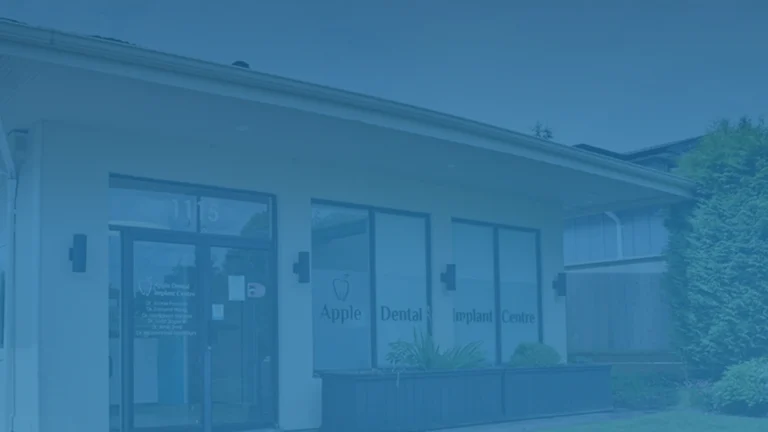
Apple Dental Specialists
1115 Stayte Rd
White Rock, BC V4B 4Y9

Patients travel to us from White Rock, South Surrey, Surrey, Langley, Delta and across the Fraser Valley, and we accept periodontal referrals from dentists throughout the Lower Mainland. Our team also speaks Hindi, Punjabi and Urdu.

Opening days and hours

  • Monday – Friday9:00 am – 5:00 pm
  • SaturdayClosed
  • SundayClosed
4.8259 Google reviews (opens in a new tab)

Find out where your gums actually stand

Book a periodontal assessment at Apple Dental Specialists in White Rock. You will get full charting, an explanation of what the measurements mean, and a written plan with costs before any treatment begins.

4.8259 Google reviews (opens in a new tab)